 50% OFF
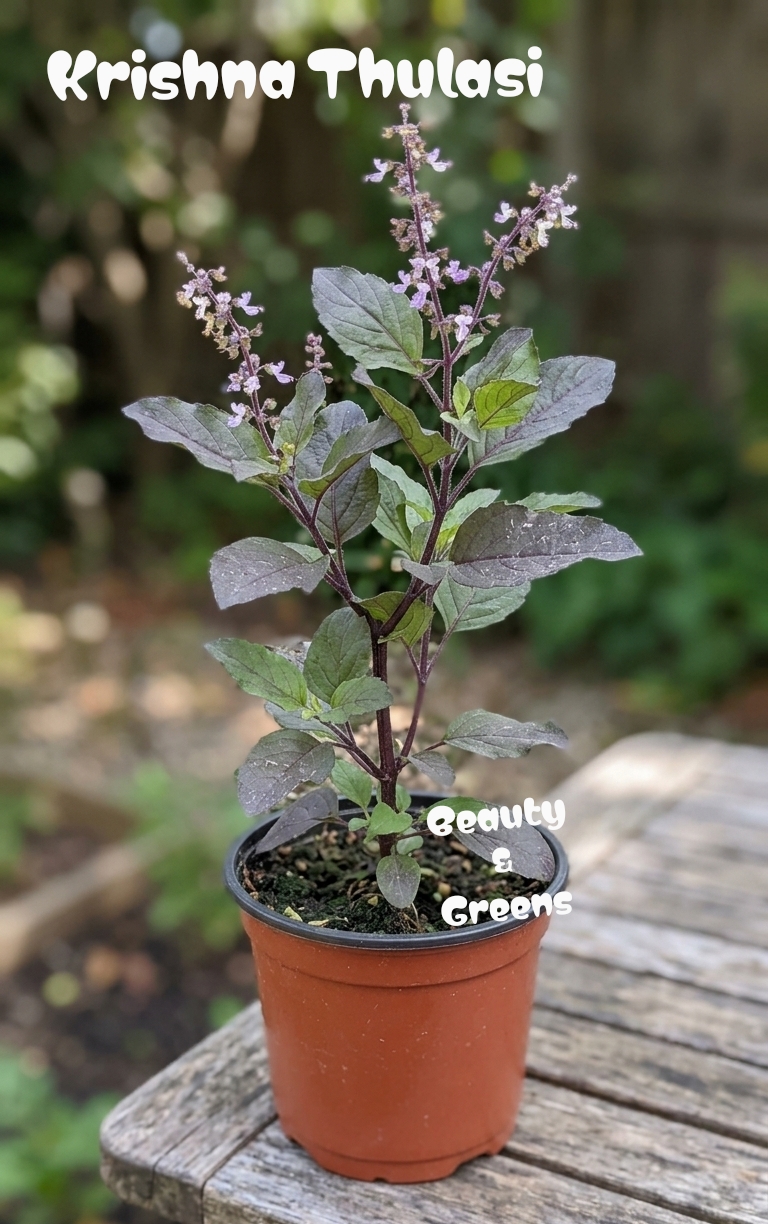
The Krishna Thulasi (Ocimum tenuiflorum) is a highly revered and sacred perennial herb celebrated for its exceptional medicinal, spiritual, and aromatic qualities. This variety is easily distinguished by its striking dark purple leaves, purplish stems, and delicate clusters of reddish-purple flowers. Known as a powerful adaptogen in traditional Ayurvedic practices, it possesses a significantly higher concentration of essential oils than other types, making it a preferred choice to help relieve stress, boost respiratory health, and strengthen the immune system. The plant emits a sharp, intensely refreshing clove-like aroma and has a bold, spicy, peppery flavor, making it a beloved cornerstone for home gardens, herbal teas, and daily wellness rituals.
It is widely recognized across different cultures as Krishna Tulasi (Sanskrit: कृष्णतुलसी), Krishna Tulsi or Shyama Tulsi (Hindi: कृष्ण तुलसी / श्यामा तुलसी), Krishna Thulasi (Tamil: கிருஷ்ண துளசி), Krishna Tulasi (Telugu: కృష్ణ తులసి), Krishna Thulasi (Malayalam: കൃഷ്ണതുളസി), Krishna Tulasi (Kannada: ಕೃಷ್ಣ ತುಳಸಿ), and Krishna Tulsi (Bengali: কৃষ্ণ তুলসী). In English, it is commonly called Dark Holy Basil, Black Holy Basil, Purple Leaf Tulsi, or Krishna Tulsi.
Best Sowing Time: Spring, Summer, and Monsoon
Temperature for Germination: 20–30°C
Soil: Well-draining, fertile loamy soil enriched with organic compost
Sunlight: Prefers full sun to partial shade for healthy foliage growth
Watering: Moderate; keep the soil consistently moist but avoid waterlogging
Spacing: 12–18 inches apart to allow room for branching
Germination Time: 7–14 days
Support Needed: Self-supporting; forms a sturdy, upright bushy herb, but regular pinching of the top buds is recommended to encourage a more compact and branch-heavy growth habit